On Angels and Demons.

Disclaimer: I planned to disclaim this story, but I changed my mind. You are a discerning bunch, blessed with big, juicy brains and curious hearts. Use them and decide for yourself.


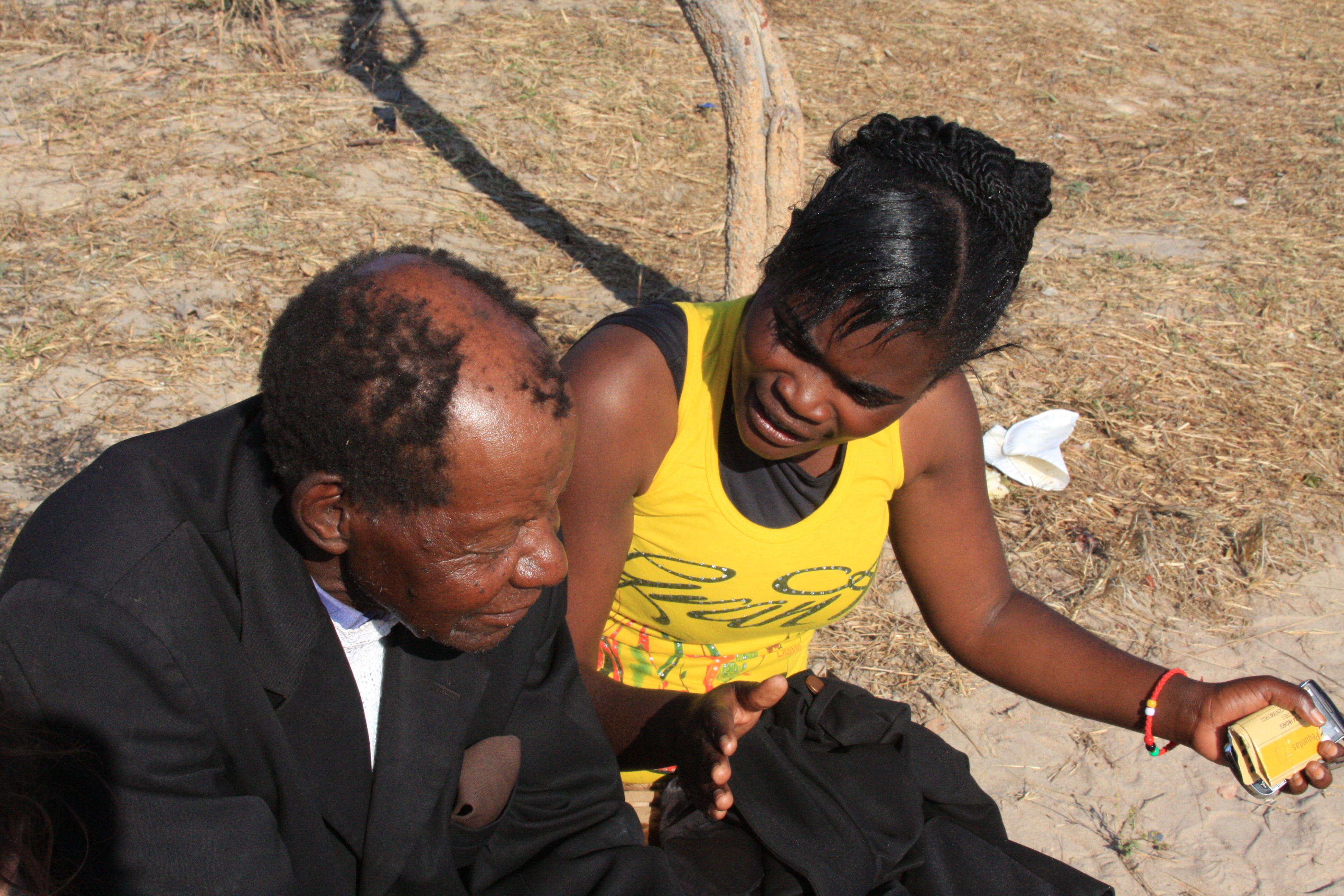
At the SCRUBS community medical clinic in Chongwe, Zambia last week, an older couple, maybe in their late 50’s, waited in a long line for medical attention. He wore an ill-fitting suit and tie, she wore a bright blue and yellow dress, with a scarf on her head. Her shoulders slumped and her eyes were flat and sad, so I figured she was pretty sick.

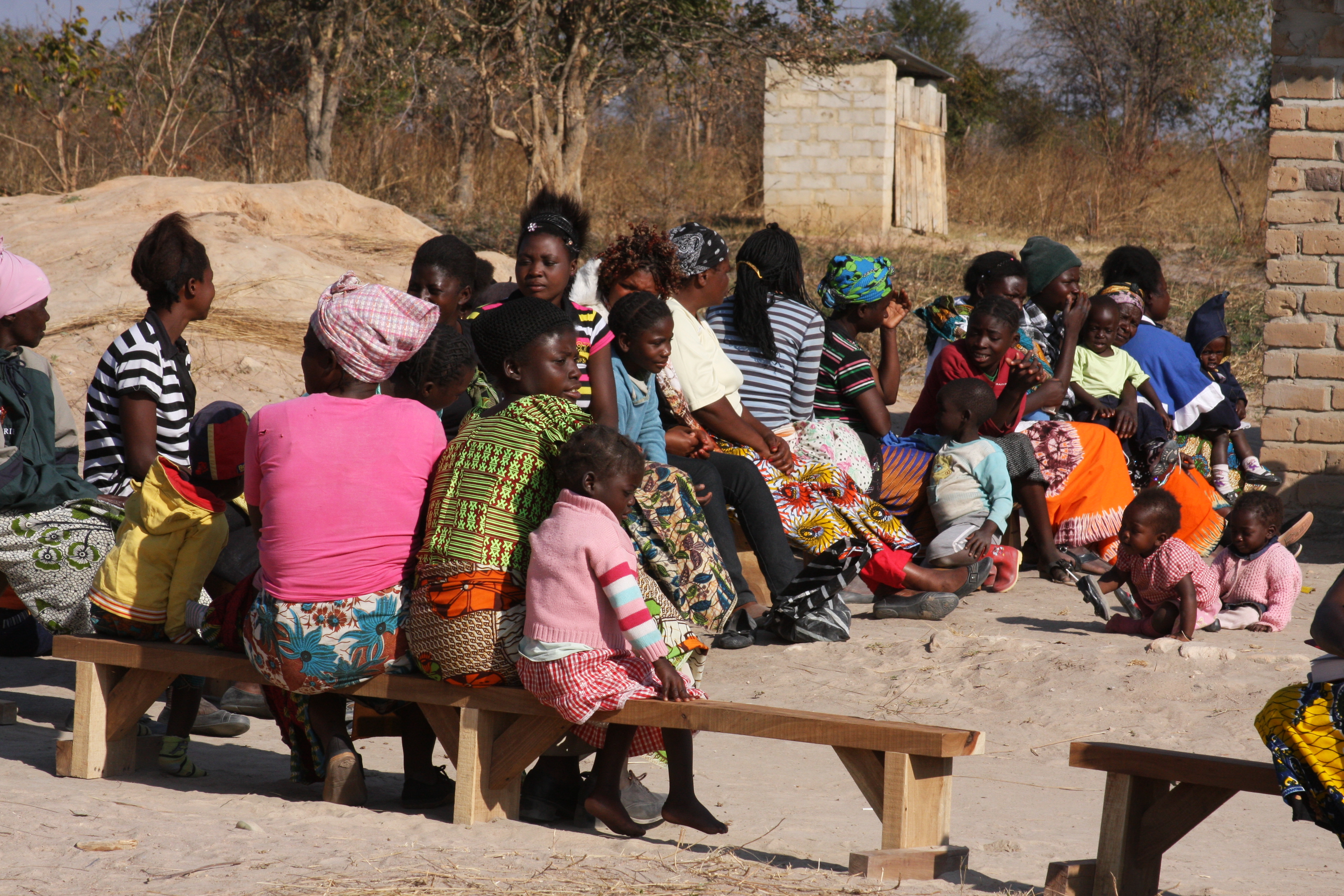
Charity and I had taken up our post on the bench outside the clinic, where people who’d just had worms pulled from their ears, abscesses drained, and HIV counseling, waited their turn to receive prayer from the 24 year-old preacher girl and her Muzungu friends.
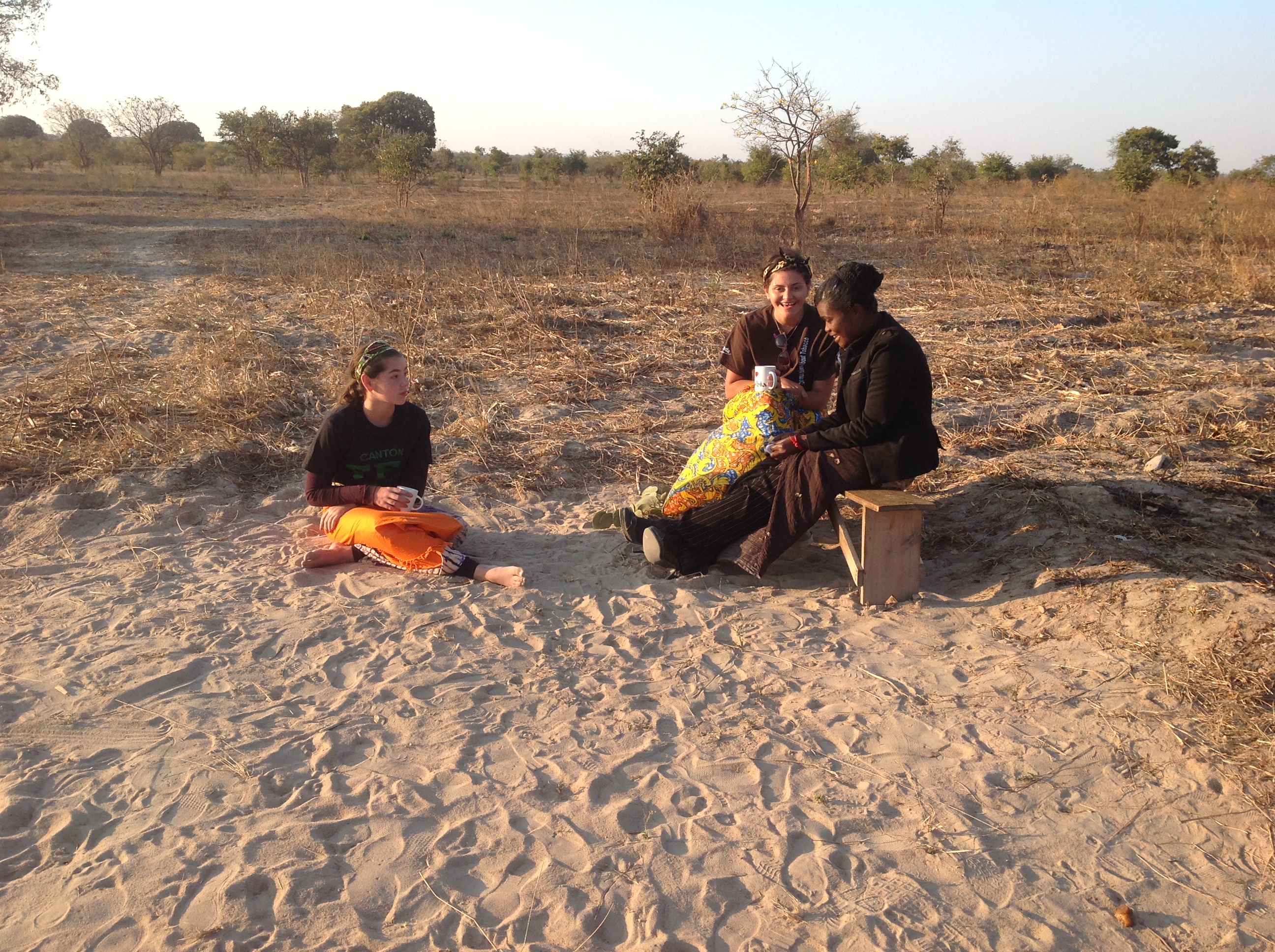
Prayer Team.

Prayer Team.

SCRUBS director Holly interrupted us and told us the couple in their Sunday best were a special case.

“She has demons,” Holly said. “You guys better get ready.”

The ancient Irish had a name for places where the supernatural grazes the natural world. They called them “thin places.” But I dwell in a post-modern culture that dismisses such nonsense, pooh-poohing angels and demons as superstitious mumbo jumbo, the mark of primitive, uneducated minds.

Although I’m a bible believing Christian and the words angel and demon are used 70 times in the Bible, even by Jesus, I ignored them like a faraway relative.

Then I went to Zambia, home of desperately thin places.

For example, in Zambia and elsewhere, women believe they are used sexually by demons, who then take up residence, wreaking havoc in their marriages and mental and physical health. It’s called having a “spiritual husband.” The woman in the blue and yellow dress, whom we’ll call Sarah, brought hers to us, saying she wanted him gone.

I want to show you pictures of Sarah, but I won't.

I want to show you pictures of Sarah, but I won’t.

So, five of us walked out into the woods and surrounded Sarah and her actual husband. Charity spent a few minutes establishing who Sarah prays to, careful not to assume.

Then we prayed with nothing but the authority Jesus gave us.

Look, I have given you authority over all the power of the enemy, and you can walk among snakes and scorpions and crush them. Nothing will injure you. – Jesus. Luke 10:19 NLT

So humble yourselves before God. Resist the devil, and he will flee from you. James 4:7

And these signs will accompany those who believe: In my name they will drive out demons; they will speak in new tongues. – Jesus. Mark 16:17

Put on God’s whole armor [the armor of a heavy-armed soldier which God supplies], that you may be able successfully to stand up against [all] the strategies and the deceits of the devil. Eph 6:11 AMP

She followed Paul and the rest of us, shouting, “These men are servants of the Most High God, who are telling you the way to be saved.” She kept this up for many days. Finally Paul became so annoyed that he turned around and said to the spirit, “In the name of Jesus Christ I command you to come out of her!” At that moment the spirit left her. Acts 16:16-17

Want to start a fight at church? Start acting like you believe these scriptures. Believe they were not just for the 12 apostles and the early church but for skinny, white girls with shaky knees praying in the Zambian bush. Oh, I can hear the hollerin’ already.

Then, Sarah joined Charity in commanding the spirit to flee in the name of Jesus, and her eyes rolled back. She started talking to us in a different voice – deeper, crazier. Holly knelt, holding onto Sarah’s feet and cried into the dirt. Jess stood behind Sarah, Shelby behind me – all of us praying in the name of Jesus.

“Goodbye to you. Goodbye to you. Goodbye to you,” Sarah shouted. Then everybody got quiet. Sarah looked at Charity and said “ok it’s gone.”

“You’re a liar,” Charity shouted and Sarah jumped up and tried to run away. Charity grabbed her arm and dragged her back to the bench.

“It’s the demon, he’s trying to trick us,” Charity said. “In the name of Jesus, and the God of Elijah and Shadrach, Meschach and Abednego, I command you to flee….”

More praying. More hollering. Then silence.

“It’s finished,” Charity said. “They’re gone.” Turns out it wasn’t one. It was three.

Sarah looked up with tears streaming down her face and started to laugh. Her husband joined her, clapping, I stared at Jessica, wide-eyed at the palpable energy change in the woods. Holly wiped the tears and dirt off her face and Charity checked her nails.

“Praise God. Praise God,” Sarah said, thanking us as we walked out of the woods. Then she rejoined her friends waiting on the benches outside the clinic. Her husband asked us for a bible, so we gave him one, then we went back to work.

I don’t know about you, but this story helps me make sense of Sandy Hook, Columbine, Ft. Hood, Aurora and Virgina Tech. At those heinous times, even Christians say, “how could somebody do such a thing?”

Really? Is it that big a mystery?

Jesus said, “the enemy comes only to kill, steal and destroy, but I came so you might have life, have it in abundance to the full, until it overflows.” (John 10:10 AMP)

Or have we just gotten too smart for all that? Too post-modern?

Remember what the Apostle Paul said:

For it is written: “I will destroy the wisdom of the wise; the intelligence of the intelligent I will frustrate.”I Cor 1:19

Teresa's in white.

Teresa’s in white.

Teresa, a SCRUBS Nurse, put it like this, “We can’t look at the person, we’ve got to look who’s standing behind him.” So maybe that’s why, when the school shooter gets the chair, it feels anticlimactic and unsatisfying – like we got the wrong guy.

You can believe what you want to, I’m just telling you what I saw. Now, more than ever, I believe the Apostle Paul when he said, THIS IS WAR:

For we are not wrestling with flesh and blood [contending only with physical opponents], but against the despotisms, against the powers, against [the master spirits who are] the world rulers of this present darkness, against the spirit forces of wickedness in the heavenly (supernatural) sphere.

Therefore put on God’s complete armor, that you may be able to resist and stand your ground on the evil day [of danger], and, having done all [the crisis demands], to stand [firmly in your place] Ephesians 6:12-13 AMP

Six Reasons Mission Trips Matter.

Yesterday at church I tried to talk about Zambia without crying or blathering on like a bimbo. I failed. Sam loves it when I cry at church.

What I think people want to know is this: Was it worth the money and the effort? Did you accomplish what you intended?

Short term missions can be tricky, so I’ll be months sorting that out, but here are six reasons I think fiscally responsible, culturally aware, Christ-centered mission trips are worth considering (besides the elephants.)

Awesome.

Whoa!

1. World travel is important because the world is circling the drain. Talking with a stranger, in broken English and sign language, we discover they too like ice cream, safe schools, jobs and Tide laundry detergent. This demystifying process reminds us people of other cultures are like us. But when we isolate ourselves with folks of our color, belief system and economic class, fear of others festers, and that makes it easier for us to bomb them when someone suggests we should. How much more of that can this world take?

Chongwe, Zambia

They stopped playing for three seconds!

2. America, while problematic, is still a global beacon of stability and function, so quit complaining. In many countries, the arrival of a new president/dictator/supreme overlord means all the rules change, again, and it’s hard to kick a ball through a moving goalpost. Although the American media insists the US Constitution is being dismantled, it’s still there and it still works. The Republic is far from perfect but it could be soooooooooo much worse. Be grateful. Be involved.

Community clinic.

Community clinic.

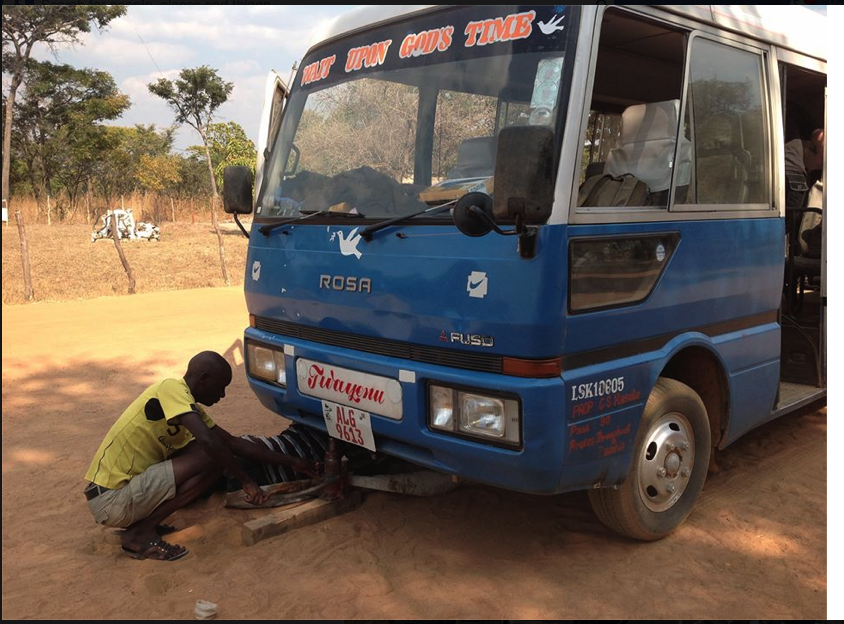
3. Pressure reveals what lurks under your spiritual exterior and Africa is wonderful at applying that pressure. So when the bus breaks down, again, turning a four-hour trip into twelve, will I pitch a fit and yell at everyone trapped in the same boat? Or will I ball up my blanket, scream into it and then say, “someday I will laugh about the Zambian dudes tying the leaf springs together with a tree bark rope.”

Wait Upon God’s Time … Often.

4. You may experience the life of faith you forget to live at home. On a mission trip, praying about things is the first resort. In Zambia, we prayed over constipation and shame and witch doctors in the woods. One morning, I prayed four times before 9am with different people for different reasons.  All day, I found myself in meditative conversation with Jesus over dumb things, big things, things that made no sense. Zambia took my prayers to a new level. And by the way, it works, but more on that later.

Chongwe, Zambia

She loved having her picture taken.

5. You are literally obeying Jesus, who said, go into all the nations and preach the gospel. Sometimes I forget to do that when the line is long at Starbucks or I’m stuck in traffic and it’s hot. It doesn’t matter where you are, Jesus commanded his followers to tell people about Him – that He is the way, the truth and the life. You’d be surprised how many people are hungry to hear that. Human beings are desperate for hope, so don’t let them down just because somebody might disagree. If that’s the case, just be nice and carry on. Remember eternal ripples are hard to count.

The girls' hut.

The gals.

6. Somebody might just say, “Yep, count me in.” On a dusty bench in Zambia that happened to me nine times. Not counting the 250 people who prayed for salvation after the Jesus film, nine people told Charity, me and a handful of others, they wanted to follow Jesus. It was like shooting fish in a barrel. All we did was open our mouths and follow Charity’s lead. Those people trust Charity because the love of God falls from her like rain. Don’t miss that…the love comes first. In fact, after hearing about the God who so loved the world he gave his only son, one woman tore off a necklace, placed on her baby by the local witch doctor, and threw it in the bushes.

Charity teaching.

Charity.

So don’t go on a short-term mission trip to change the world, because you won’t. Go because the world will change you.

And that may just be what God’s after.

Notes From Zambia

Garbage smoke.

Garbage smoke.

Greetings from the land of contradiction, the lovely and tragic Lusaka, where no matter how you try to sort it into matching African piles, so you can avoid saying blithe and stupid things on your blog, you will still fall backward into the land of hopeless paradox, praying for mercy as you try to explain.

Here’s kind of what I mean by that:

Rickiey, our favorite team carpenter who speaks oddly prescient and accidentally hilarious things, spent an advance week with the orphans in Chongwe.

“These people don’t need us here,” he reported to the team. “They don’t. They’re happy, they’re content.”

He’s wrong of course, but he’s also deeply, inarguably right.

Charity and the water.

Charity and the water.

Hugh and Rickiey spent four frustrating days replumbing the orphanage before the rest of the team arrived. Through the miracle of southern engineering they managed to pipe water into it after three deep, expensive bore holes failed to yield new water.

When Charity, one of the three teachers for 150 kids, saw water running out the kitchen faucet, for the first time in three years, she cried.

Do they need us? Yes.

But on our third day in Zambia’s capital city, I asked our local friend Chase why, with four million people in Lusaka, the streets aren’t more crowded.

“They are mostly in the compounds,” he said. “Some people will never leave them, never walk on Lusaka’s pavement a mile or two away.” There’s no reason to, he said, they can’t afford it.

The compounds are massive urban ghettos, some with upwards of 40,000 people living in their dirt streets. Concrete huts that once housed two families, have been subdivided to house six. Pit toilets behind the houses and shacks are predictably too close to the shallow wells which makes dirty water and sick kids. Same old story.

And here we come, two van loads of Muzungas to check it all out – something that feels condescending and necessary and horrifying because I really want a bottle of water but I can’t yell out the window for one, saying, “Does anyone have change for a hundred kwacha?” That’s twenty bucks.

Do they need that? No.

And I know those people would trade places with the rich Muzingus in a minute, they would take hot showers, eat more than just shima – the local cornmeal staple – and not watch their kids die of malaria.

And what? So they can die of loneliness and depression like we do?

Are our lives better because we have the money to fix diarrhea and sleep safely in our homes? Yes.
Are contentment and gratitude our natural response? No.
Is kindness to strangers a national priority in America like it is in Zambia?

Lima Compound

Lima Compound

As the van inches down the dusty alley with open pits on each side, from which kids fill water bottles for reasons we hope don’t include hydration, they check us out shyly. If any of us waves first, they erupt in smiles, big white, bright eyed smiles. The adults do too. This happens all day every day, everywhere we go.

One kid even yelled, “Look, Chinese!”

Chinese?

So are we helping? Yes.
Is a large portion of Zambia’s GDP fueled by the Christian Industrial Complex? Yes.
Are a lot of those Christians doing thankless and spectacular work? Yes.
Is our work a meaningful response to systemic, global economic injustice? I doubt it.
Does Jesus require it of his followers regardless? Yes.

In an hour, we leave for Chongwe where a troupe of orphans have prepared songs in our honor. We will set up the clinic, build school benches and chicken coops and maybe welcome a baby into this fearsome, magnificent place.

And as we sleep under the stars of the Southern hemisphere, maybe The Lord will call us out of our huts, and dare us to count them.